
Craftsmanship Education · Mineral Relief
A pet portrait can live on a flat surface, or it can physically rise from it. That difference is what makes a hand-sculpted 3D pet portrait feel closer to a framed sculpture than a conventional picture.
At Luminipet, our Hand-sculpted 3D Pet Portraits begin with your pet’s photo and are built as framed relief artworks. The pet’s face, fur, ears, clothing, and other selected details are shaped into raised forms, then colored and finished by hand. This guide explains what “relief” means, how the mineral-based foundation fits into the process, and what actually creates the dimensional effect you can see and feel.
What Is a Hand-Sculpted 3D Pet Portrait?
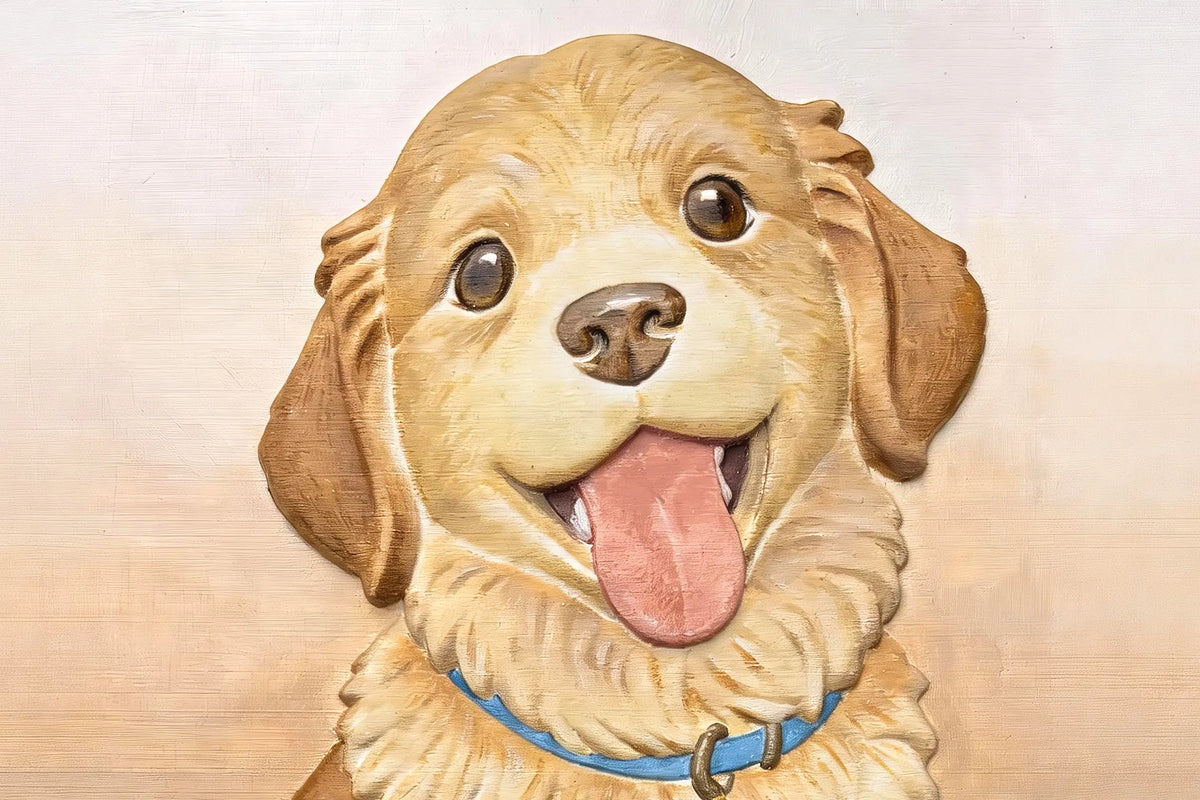
A Hand-sculpted 3D Pet Portrait is a framed relief artwork made from a pet photo, where parts of the subject physically project from the background instead of existing only as a flat image.
In relief sculpture, forms remain attached to a background while rising from it at different depths. Luminipet applies that idea to pet portraiture: recognizable features are translated into raised shapes, surface texture, hand coloring, and a finished framed composition.
- It is not simply a printed image: the portrait has physical raised form.
- It is not a freestanding 360° statue: the sculpture remains integrated with a framed background.
- It is built from a pet reference photo: facial structure, markings, expression, and other identity cues guide the artwork.
- It is finished by hand: current Luminipet product pages describe the 3D surfaces as shaped, painted, layered, and finished by artists.

1. What Does “Relief” Mean in a Pet Portrait?
Relief sits between a flat picture and a freestanding sculpture. The artwork still has a background plane, but parts of the subject rise forward from that surface. In a pet portrait, this makes it possible for the nose, muzzle, cheeks, ears, fur, paws, clothing, or decorative details to have real physical depth.
That is why a framed relief changes as you move around it. Light falls across the raised surfaces differently, small shadows form around sculpted edges, and the texture remains visible even when the artwork is viewed from a slight angle.

2. Flat Portrait vs Relief vs Full Sculpture
“3D pet art” can mean several very different things online. A useful way to understand Luminipet’s format is to compare how the subject relates to the background.
| Format | Physical structure | How it is viewed | Main visual effect |
|---|---|---|---|
| Pet Portrait Print | The finished image remains on a flat printed surface. | Primarily from the front. | Illustration, color, composition, and printed detail. |
| Hand-painted Pet Portrait | Paint is applied by hand on canvas; brushwork may create surface texture, but the pet is not built as raised sculpture. | Primarily from the front. | Brushwork, color mixing, canvas texture, and painterly detail. |
| Hand-sculpted 3D Pet Portrait | The pet is physically shaped in relief and remains attached to the framed background. | Front view plus visible depth from nearby angles. | Raised form, shadows, sculptural texture, and hand coloring. |
| Freestanding sculpture | The subject exists as a separate object in the round. | Designed to be viewed around multiple sides. | Full 360° volume. |
If you are choosing between Luminipet’s three portrait formats rather than learning about the craft itself, see our portrait medium comparison guide.
3. What Does “Mineral Relief” Mean at Luminipet?
Luminipet’s current 3D product pages describe the relief artwork as being handcrafted on a natural mineral-based foundation. The site lists materials such as lapis lazuli, malachite, obsidian, and amethyst among those used in that foundation.
For a customer, the practical idea is simpler than the material list: the foundation supports the raised sculptural surface. Luminipet describes it as giving the piece a more substantial feel and allowing fine raised texture before artists shape, color, layer, and finish the visible portrait by hand.
We do not publish the internal formula, mineral proportions, curing method, or exact relief thickness. Those technical details should not be guessed from a product photo. What the finished work visibly demonstrates is a firm framed surface with raised pet features and hand-finished texture.
Foundation
The mineral-based base provides the surface on which the relief is built.
Shape
Selected pet features are formed with physical projection from the background.
Surface
Fur direction, facial contours, clothing, and decorative elements can receive sculpted texture.
Finish
Color and detail are applied by hand to complete the portrait’s expression and visual identity.
4. How Does a Pet Photo Become a 3D Relief Portrait?
A photograph is flat. A relief is not. Turning one into the other means deciding which visual information should become physical form.
Luminipet does not publish a proprietary studio formula or exact internal sequence for every piece, so it would be misleading to invent one. The customer-facing workflow is clear, however: a pet photo provides the reference, a design preview establishes the portrait direction, the physical relief is handcrafted after approval, and finished studio images are reviewed before shipment.

- Reference: the pet photo establishes face shape, markings, expression, fur pattern, and other recognizable details.
- Design direction: the chosen series determines whether the pet stays True-to-Life or enters a Character Role, Royal Style, or Pet World-Tour scene.
- Preview: the design is reviewed before final physical production so important visual details can be checked.
- Handcrafting: the relief surface is shaped, layered, painted, and finished by hand.
- Final confirmation: current Luminipet shipping guidance states that finished-product images are sent before shipment.
5. What Is Actually Hand-Sculpted?
Not every area needs to project by the same amount. The purpose of relief is to create a hierarchy of depth: some forms come forward, some stay closer to the background, and surface texture helps connect them.
Depending on the pet and chosen art series, the most noticeable dimensional areas may include:
Face & muzzle
Cheeks, muzzle volume, forehead, nose, and jaw shape are important because small proportional changes can affect likeness.
Ears & fur
Ear edges and fur direction create clear opportunities for physical layering and visible shadow.
Eyes & facial details
The eye area combines sculpted form with careful coloring to keep the expression recognizable.
Outfits & accessories
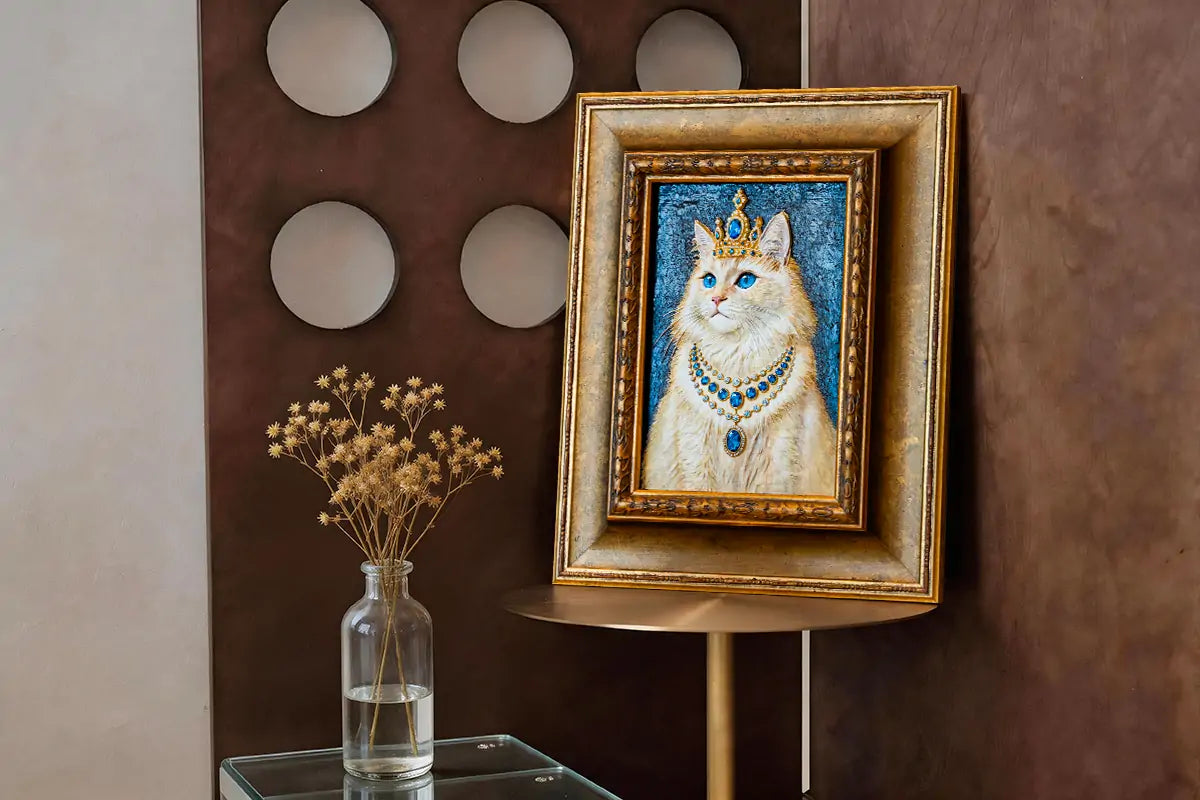
Royal jewelry, uniforms, collars, travel clothing, and other design details can add another layer of depth around the pet.

6. Sculpting Creates Depth; Hand Coloring Brings the Pet Back
Shape alone is not enough. Two pets can have a similar head silhouette and still look completely different because of eye color, patches, masks, stripes, coat transitions, nose color, and tiny facial markings.
This is why Luminipet describes the 3D work as both hand-sculpted and hand-colored. The raised surface establishes volume; color restores the specific visual information that helps the sculpture read as one individual pet rather than a generic dog or cat.
In a Royal Style piece, coloring also separates fur from fabric, metal-like ornament, jewels, and background. In a Character Roles or Pet World-Tour piece, it helps the pet remain visually distinct even when the surrounding story becomes more elaborate.

7. The Same Relief Craft Can Tell Four Very Different Stories
The 3D medium determines how the artwork is physically built. The art series determines the story around the pet. Luminipet currently offers four main creative directions, and each can use relief differently.


8. Who May Prefer a Hand-Sculpted 3D Pet Portrait?
A 3D relief is not automatically “better” than a Pet Portrait Print or Hand-painted Pet Portrait. It is a different physical experience. You may prefer it when the object itself matters as much as the image.
You want visible physical depth
Raised fur, face contours, clothing, and surface texture are part of the finished artwork rather than only visual shading.
You want a framed sculptural piece
Relief offers more dimensional presence than a flat portrait while still working as framed wall or display art.
You enjoy tactile craft
The making process—shaping, layering, painting, and hand finishing—is a meaningful part of the appeal.
You want a story-rich style
Royal clothing, character uniforms, or travel scenes gain an extra layer of visual interest when some elements physically project from the background.
If your priority is a lighter, simpler wall portrait, a Pet Portrait Print may make more sense. If you primarily love real brushwork and canvas, explore a Hand-painted Pet Portrait. If you want physical sculptural depth, browse the Hand-sculpted 3D Pet Portrait collection.
9. What Should You Check Before the Physical Relief Is Finished?
A dimensional portrait takes the flat design into physical production, so the design preview is the right stage to focus on identity and composition. Luminipet’s current shipping guidance states that official physical production begins after the design is approved.
- Face shape: does the head, muzzle, cheeks, and ear position feel like your pet?
- Eyes and expression: are the gaze, eye shape, and emotional tone familiar?
- Markings: check patches, stripes, blaze patterns, chest color, and other identifying boundaries.
- Pose and crop: make sure important features will not be hidden by clothing, props, or framing.
- Series details: confirm the Royal title, Character Role, travel scene, or True-to-Life direction.
- Name or small custom details: verify spelling and placement before the design moves forward.
For current preview, revision, production, and shipping terms, check the FAQ and Shipping & Delivery Policy before ordering.
Frequently Asked Questions
Is a Hand-sculpted 3D Pet Portrait the same as a full pet sculpture?
No. Luminipet’s 3D format is framed relief art. The pet projects from a background surface but remains part of the framed composition. A freestanding sculpture is designed as a separate three-dimensional object that can be viewed around multiple sides.
Is the 3D portrait printed?
Luminipet’s current 3D product pages describe the relief portraits as not printed, resin, or plaster. They are presented as hand-shaped, hand-colored relief works built on a natural mineral-based foundation.
What does “mineral-based foundation” mean?
It refers to the base material used for the relief artwork. Current Luminipet product pages list materials such as lapis lazuli, malachite, obsidian, and amethyst among those used in the mineral-based foundation. The exact internal formula and proportions are not publicly specified.
Can a 3D pet portrait still look like the original pet?
That is the goal of the reference process. Face shape, eyes, markings, expression, fur pattern, and other recognizable traits are taken from the pet photo, then translated into a raised and hand-colored surface.
What pets can be made into a 3D portrait?
Luminipet’s current FAQ says the studio works with more than cats and dogs, including pets such as rabbits, hamsters, horses, chameleons, and lizards. Contact the team if you are unsure whether your pet or custom idea fits the available options.
Can I choose a creative style for the 3D portrait?
Yes. The current 3D collection includes True-to-Life, Character Roles, Royal Style, and Pet World-Tour. The medium stays sculptural while the surrounding story and styling change.
Do I see a preview before physical production?
Yes. Luminipet’s current process includes a digital design preview before official physical production begins. Review the current FAQ and policy pages for the latest timing and revision terms.
How is a 3D relief different from a Hand-painted Pet Portrait?
A Hand-painted Pet Portrait is painted by hand on canvas, so its identity comes through brushwork, color, and painted texture. A Hand-sculpted 3D Pet Portrait adds physical raised form, so depth and shadows become part of the object itself.
See What Your Pet Looks Like in Relief
If physical depth, hand-shaped texture, and a framed sculptural finish are what draw you to custom pet art, explore the current 3D collection and compare the four art series before choosing a direction.


